Insurance
Add Location Intelligence to the SIU Investigative Toolkit
See the movement behind complex claims.
Insurance investigations bring together claims records, statements, public records, social media, surveillance, databases, and other sources. Location intelligence adds another dimension—helping investigators understand movement, recurring locations, geographic relationships, and patterns that may warrant further investigation.
Reveal gives SIU teams access to commercially available device location intelligence to help develop new leads and add context to complex fraud investigations.
Claims Tell You What Was Reported. Movement Can Add Context.
SIU investigators rarely rely on a single source of information. Statements, claims history, public records, social media, surveillance, interviews, documentation, and other investigative resources each contribute a piece of the picture.
Location intelligence provides another piece.
By examining historical device observations around relevant locations and time periods, investigators can identify patterns and geographic relationships that may help corroborate information, surface inconsistencies, identify previously unknown connections, or point an investigation toward its next step.
Reveal doesn't replace traditional SIU methods. It gives investigators another intelligence source to evaluate alongside them.
From Suspicious Claim to Investigative Lead
01 — Start With What You Know
An address. A business. A loss location. A date and time. A known device identifier. Or another location relevant to the investigation.
02 — Explore Relevant Activity
Examine commercially available device observations associated with relevant locations and time periods.
03 — Identify Patterns & Relationships
Explore recurring locations, movement patterns, geographic relationships, shared activity and other observations that may add context to the claim.
04 — Develop the Investigation
Use those insights to help prioritize additional research, interviews, surveillance, records review, or other appropriate investigative methods.
Where Location Intelligence Can Add Value
Questionable Claims & Reported Circumstances
Explore location observations relevant to the reported circumstances of a loss or claim and identify patterns or inconsistencies that may warrant additional investigation.
Organized Fraud & Connected Claims
Identify recurring geographic relationships, common locations, and other patterns that may help investigators recognize connections among seemingly unrelated claims, subjects, businesses, or events.
Property & Auto Investigations
Add location-based intelligence to investigations involving theft, staged incidents, suspicious losses, arson, vehicle activity, or other circumstances where movement and presence may provide useful investigative context.
Workers' Compensation & Disability
Use historical mobility intelligence as one potential investigative input when evaluating complex claims, while relying on appropriate investigative procedures to establish identity and interpret observed activity.
Provider & Network Investigations
Explore recurring activity around businesses, facilities, providers, or other locations of interest to help identify patterns and relationships for further investigation.
Major Case & Fraud-Ring Investigations
Analyze broader movement and geographic relationships when an investigation expands beyond a single claim and involves multiple locations, subjects, entities, or jurisdictions.
Reveal complements your existing investigative resources to deliver richer context and stronger leads.
Another Layer of Investigative Intelligence
Insurance investigations rarely hinge on a single data point. Claims information, public records, OSINT, surveillance, interviews, and existing case findings each provide a different view of the circumstances surrounding a claim.
Location intelligence adds movement and geography to that picture. Reveal can help investigators identify patterns, recurring locations, and geographic relationships that provide additional context to information uncovered through other investigative methods.
Used together, these intelligence sources can help SIU teams ask better questions, prioritize promising leads, and determine where additional investigation may be warranted.
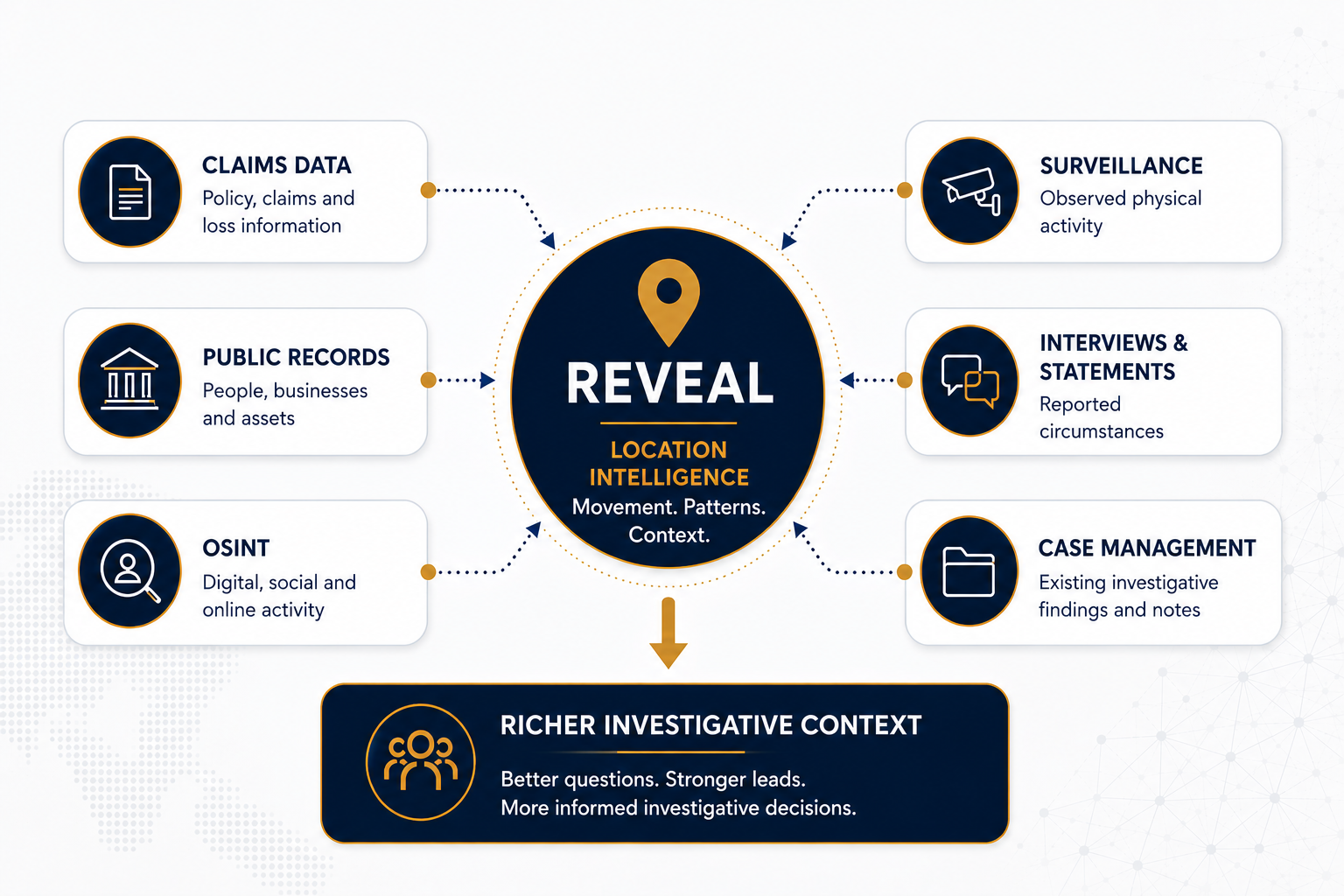
The value isn't in replacing what investigators already know—it's in revealing connections between the information they already have.
Location-Based Discovery
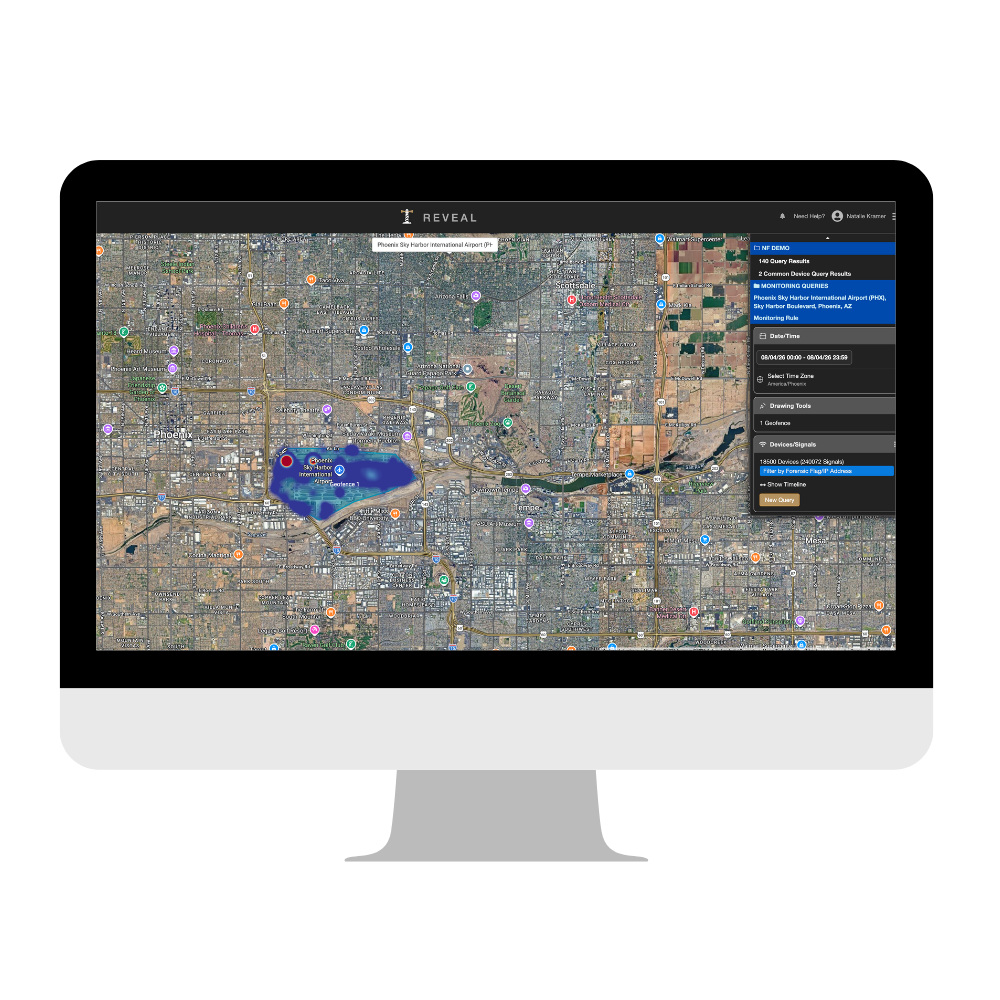
Begin with relevant places and time periods to identify devices observed within an area of interest.
Historical Movement Analysis
Explore historical device observations to understand recurring locations and movement patterns over time.
Pattern & Association Analysis
Identify geographic relationships, common locations, and recurring activity that may warrant further investigation.
Built for Investigators. Not Data Scientists.
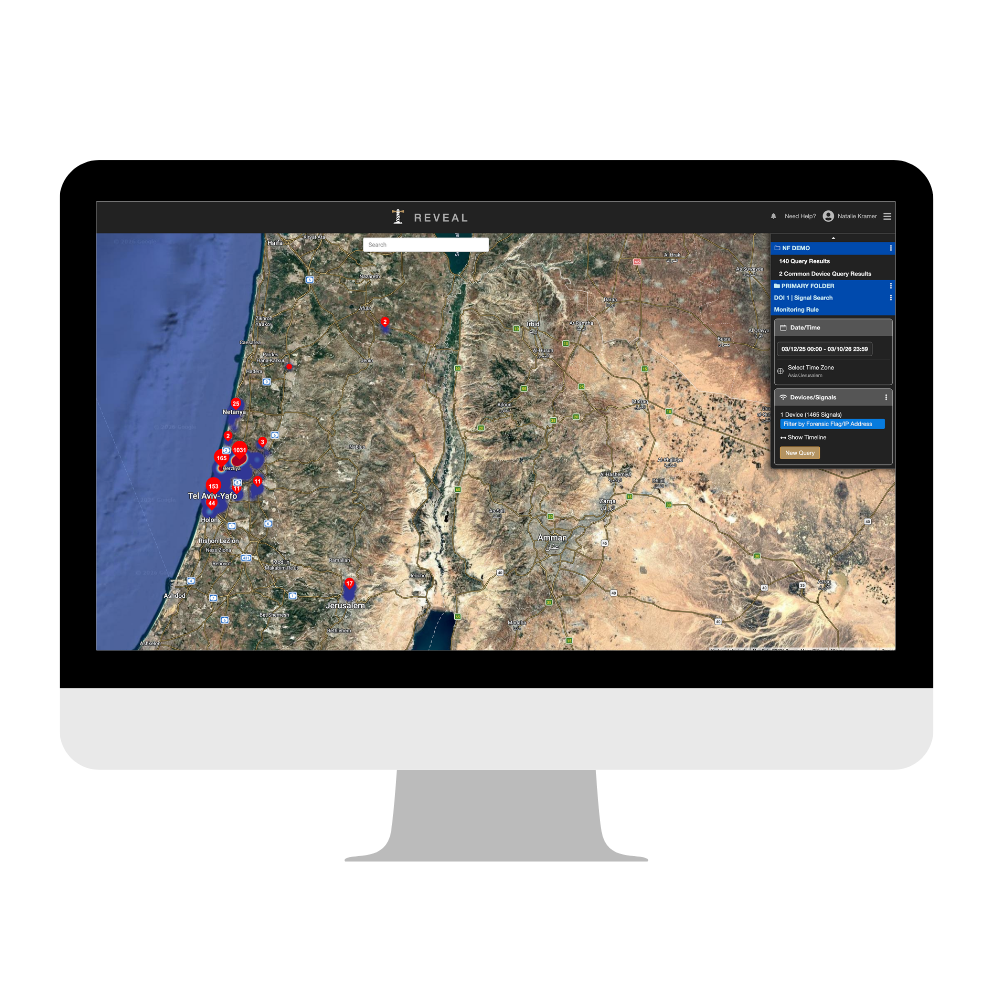
Investigative Flexibility
Move from broad location-based discovery toward more focused analysis as new information develops.
Browser-Based Access
Conduct analysis through Reveal without requiring specialized geospatial software or a dedicated data-science team.
Intelligence Requires Context
Location intelligence is one investigative input. A device observation does not, by itself, establish:
Identity — a device identifier should not automatically be assumed to represent a specific person.
Intent — presence or movement alone does not explain why activity occurred.
Wrongdoing — an observed device or location pattern does not independently establish fraud.
Claim outcome — Reveal provides investigative intelligence, not a determination regarding coverage, liability, eligibility, or claim disposition.
Reveal helps investigators ask better questions and develop stronger leads. Those insights should be evaluated alongside other available information and appropriate investigative methods.
Insurance Fraud Doesn't Always Stop at the Border.
Complex claims, organized fraud networks, businesses, assets and individuals can span jurisdictions and countries.
Fog provides international SDK-derived location intelligence across 200+ countries and territories, with additional low-latency Location Stream capabilities available across 40+ countries, supported by a network of trusted regional partners.
Powerful Intelligence. Responsible Investigations.
Insurance investigations involve sensitive decisions about individuals, claims and potential fraud. Fog believes location intelligence should be used as an investigative resource—not as a substitute for professional judgment or appropriate investigative processes.
Reveal provides commercially available device location intelligence to help qualified investigators develop and evaluate leads alongside other information available to them.
Add Location Intelligence to Your Next Investigation.
See how Reveal can complement your SIU's existing investigative resources and help turn location data into actionable investigative leads.